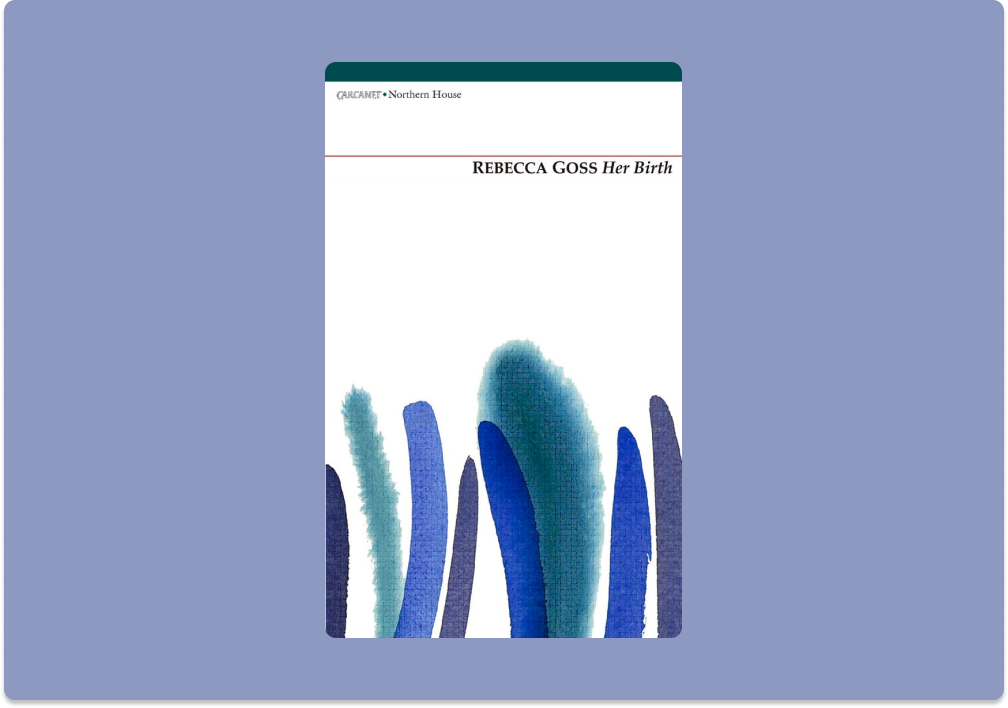
Her Birth by Rebecca Goss
Flash Review by Emma Mott
There’s a common idea that great suffering makes a poet great, but - as any litmag slush reader can tell you - this is not true. John Mulaney has a joke about how “there are depressed people who don’t even have the decency to be great comedians” - different art form, same point.
Former art teacher here: all art is good art. (excluding art that promotes racism, facism and the other terrible -isms, duh.)
That said, good poetry provides catharsis for the writer; great poetry builds a fragile, precise bridge of language that creates understanding in the reader.
Rebecca Goss, intentionally or not, understands this.
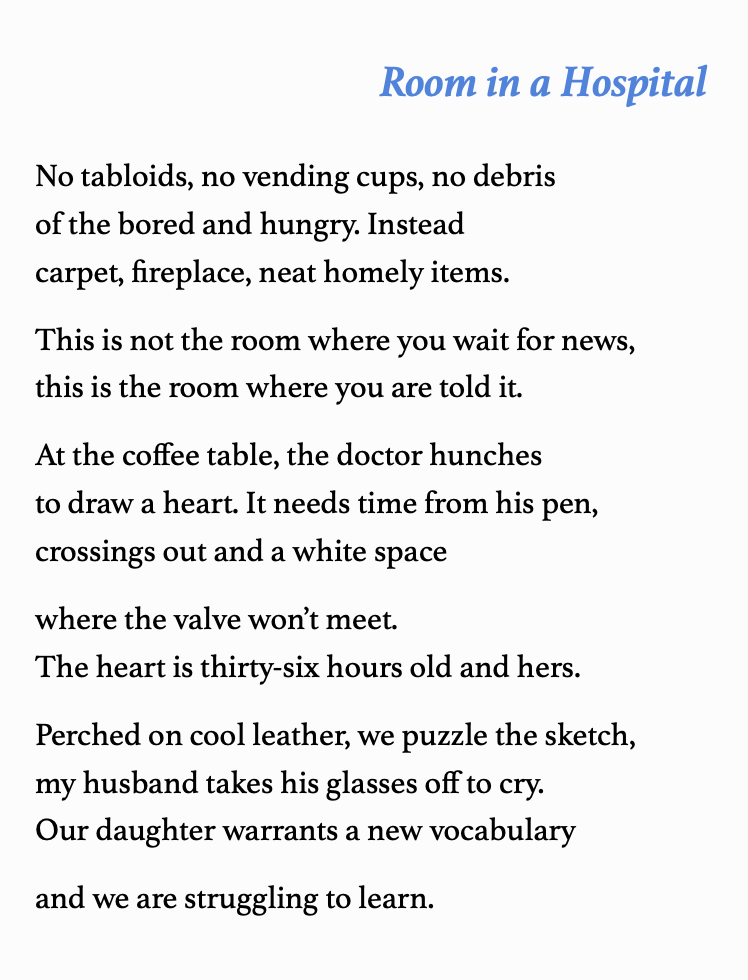
The first two-thirds of her book, Her Birth, bend time around a single point: the birth of Goss’s daughter, who passed from severe Ebstein’s Anomaly at less than 16 months old. This is a heartbreaking story. Read it somewhere you can cry.
But do read it. Goss’s simple prose belies fervent emotional complexity. In “St. Mary’s,” the speaker states “People are entering / the church. Her funeral / has started. I cannot stop it.” Juxtaposing warmth with biting loss, Goss offers readers no respite from her grief and shock, even in the miniscule: her daughter’s “teeth that never came,” “homemade stews / hurled frozen in a bin bag,” “a cold pit / of pyjamas.” And yet-
Unthinkably, through the last third, hope and joy rise from the pages. Goss becomes mesmerized by her own life - joy and grief somehow coexisting.
I didn’t mention Mulaney earlier to prove my pop-culture knowledge, but to let you know I know the distinction between tragedy and great poetry. Her Birth is both. Stripped to the most fragile, precise honesty, it is a remarkable - and remarkably well-told - story of loss and love.
Read it.